

The Care Circle: The Chiropractor and Bodyworkers

Polo is a high-impact contact sport. That matters when people talk about horse care, because high performance polo ponies are not just galloping in straight lines. They are stopping hard, turning fast, taking shoulder-to-shoulder hits, and being asked to stay balanced and responsive through every play.
That physical demand is exactly why bodywork belongs in the Care Circle at El Lirio Polo. A horse can have talent, speed, and heart, but if the body is tight, restricted, or compensating, performance drops quickly. More importantly, the risk of bigger problems goes up.
Why Bodywork Matters in Polo
A good polo horse has to sit behind, load the hind end, and fire into turns without hesitation. That kind of movement takes full-body function. The back has to stay loose, the ribcage has to move, and the sacroiliac area has to support power from behind.

When a horse gets tight through the back, sticky in the SI, or restricted through the ribs, you feel it right away. The turn gets flatter. The stop gets choppy. The horse stops stepping under itself the way it should. And that clean snap back to speed starts to disappear.
In polo pony training, those details matter. Small restrictions become performance issues fast when the game keeps asking for explosive movement.
The Physical Toll of the Game
Polo horses absorb real impact. Shoulder-to-shoulder ride-offs are part of the sport. So are hard accelerations, quick decelerations, and repeated changes of direction at speed.

That workload can leave a horse bracing through the topline, shortening through the stride, or protecting one side of the body. Sometimes the signs are obvious. Sometimes they are subtle. A horse may feel heavier in one rein, less willing to bend, late behind, or less confident stepping into contact.
This is where bodywork becomes essential. It helps address the physical toll before it turns into a bigger issue. That is Horse First care in practice: preventative, consistent, and focused on long-term soundness instead of waiting until something breaks down.
What a Bodyworker Helps Restore
A skilled equine chiropractor or bodyworker is not there for show. They are there to help restore motion, reduce restriction, and keep the horse comfortable enough to perform like an athlete.
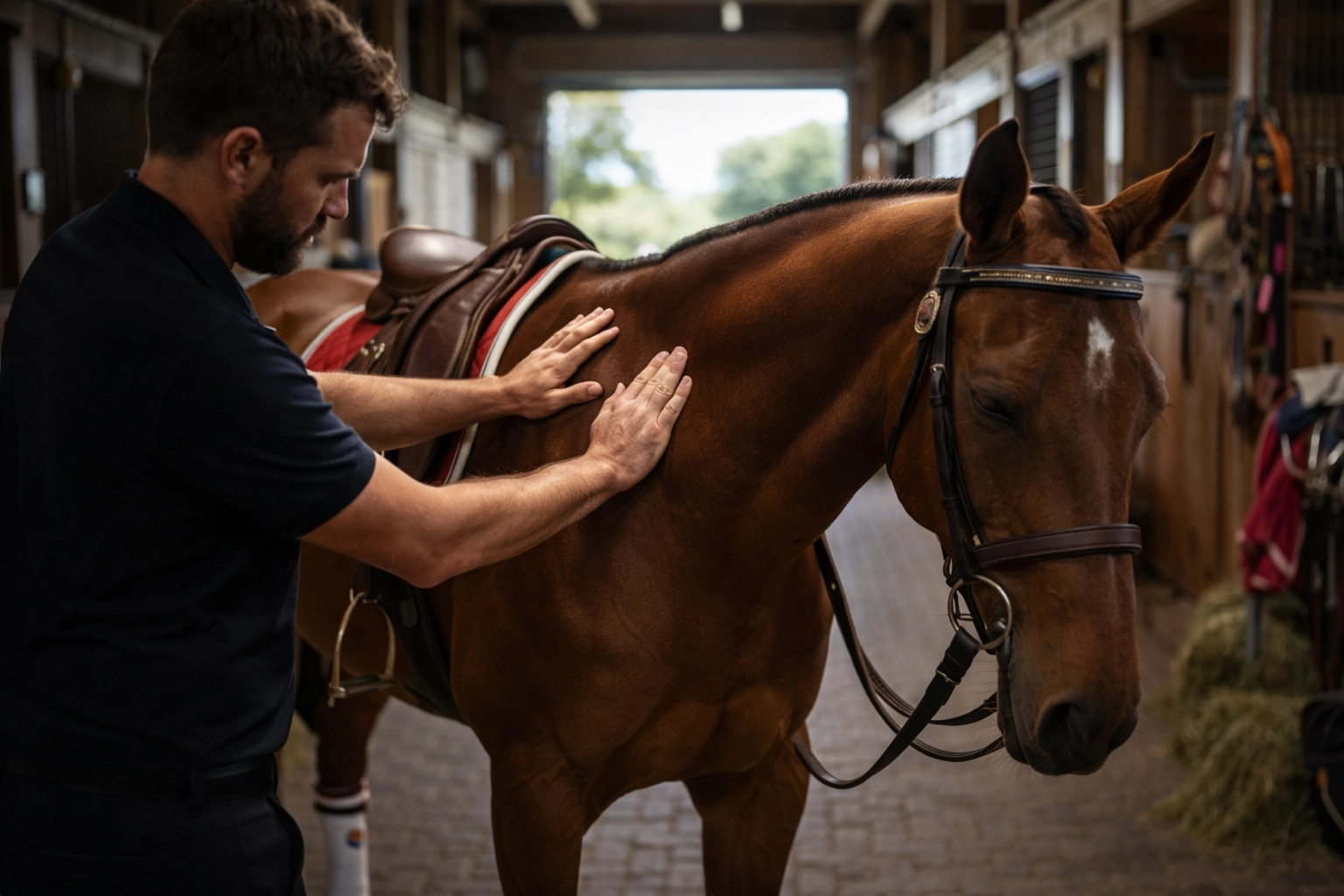
An equine chiropractor works by finding joints that are not moving the way they should, then making precise adjustments to restore normal motion. The goal is not just to "crack" something. It is to help the joints move correctly again so the horse can travel more freely and the nervous system can communicate without as much interference.
That matters because when one area gets restricted, the horse starts compensating somewhere else. A tight back can make the hind end work unevenly. A restricted neck or ribcage can change bend, balance, and breathing. Over time, those compensations can create more tension, more uneven loading, and sometimes added pressure on nearby nerves. Restoring motion helps relieve that pattern before it becomes a larger performance or soundness issue.
These professionals also do more than adjustments. Many include massage, soft tissue work, and physical therapy as part of treatment. That can mean stretches, strengthening exercises, and mobility work designed to keep the horse supple, balanced, and strong between sessions.
That can include evaluating tension through the back, releasing tight fascia, improving rib mobility, or helping the horse move more freely through the pelvis and hind end. When the body is working correctly, the horse can sit behind better, push more evenly, and come out of turns with more power and less resistance.
For high performance polo ponies, that is not an extra. It is part of responsible management.
The Performance Signs Riders Notice First
Most of the time, riders feel the problem before they can clearly see it. The horse may start drifting off the line, resisting one direction, swapping off behind, or feeling dull coming out of a turn.

Those signs do not always mean lameness, but they do mean something is worth checking. A horse that cannot move freely cannot stay fully athletic. If the back is tight or the SI is not functioning well, the horse often compensates somewhere else. That is when minor restrictions can start becoming larger training or soundness issues.
Preventative bodywork helps keep the system clear, so the horse is not spending every chukker managing discomfort.
Bodyworkers as Part of the Care Circle
At El Lirio Polo, bodyworkers do not work alone. They are part of the same Care Circle as veterinarians and farriers. Each role supports the others.
If a horse is sore behind, the veterinarian helps diagnose the issue. The farrier helps build the right support from the ground up. The bodyworker helps restore comfort, mobility, and function through the rest of the system. That team approach is how we keep horses playing well and staying sound.
It also reflects how we think about the sport overall. Great care builds better horses, better programs, and better long-term outcomes. It is one of the reasons polo continues to create strong equestrian branding opportunities for partners who want to align with excellence, discipline, and real horse-first values.
Lily’s Pro-Tips
Watch the turns. If the horse stops sitting behind and pushing evenly out of the turn, pay attention.
Do not ignore small changes in bend, transitions, or willingness to take contact. Those are often early signs.
Keep bodywork preventative. Do not wait until the horse is visibly struggling.
Make sure your vet, farrier, and bodyworker are working from the same page.
In polo pony training, consistency matters more than last-minute fixes.
The best-performing horses are usually the best-managed horses. When we stay ahead of tightness, soreness, and restriction, we give them the best chance to stay confident, powerful, and sound through the season.
— Lily Isabella Laurent, CEO, El Lirio Polo
Comments